Guides
How to start a locksmith business in six checkable phases
Starting a locksmith business works best in phases, each ending in something checkable: a license answer, a stocked van, a tested intake script, a first job file.
What to take away
- Each phase ends in an artifact, not in a feeling of readiness: a dated license answer, a van inventory that matches a list, an intake script read aloud, a first completed job file.
- Phase order matters. Registration before insurance, insurance before stock, stock before advertising.
- Buying tooling before you know which keyways your area uses is the classic reversal.
- The intake script is startup work. It carries the authority check, and written after the phone starts ringing it gets written badly.
Most of the expensive mistakes in a locksmith startup are ordering mistakes rather than spending mistakes. If you cannot point at that closing item, the phase is not finished, whatever the calendar says.
Phase one: settle the entity and the permission question
- Choose and register the entity with your secretary of state, then obtain the federal tax identification the structure requires.
- Ask your state licensing board whether locksmiths are licensed or registered. If no trades board covers the work, ask the state agency that regulates private security and alarm services.
- Ask your city or county clerk about a general business license and about any local locksmith registration or bond.
- Register for sales tax with your state revenue department, and confirm whether labor is taxable there as well as parts.
- Write each answer on one sheet with the authority, the date and the person who gave it.
Budget the first year. These are typical US ranges, not quotes, and the federal tax ID costs nothing.
| Item | Typical US range | Note |
|---|---|---|
| Entity filing | $50 to $500 | paid once |
| Surety bond | $100 to $300 a year | on a $10,000 to $25,000 bond |
| General liability insurance | $500 to $1,500 a year | tool cover adds more |
| Pinning kit | $100 to $300 | starter depth |
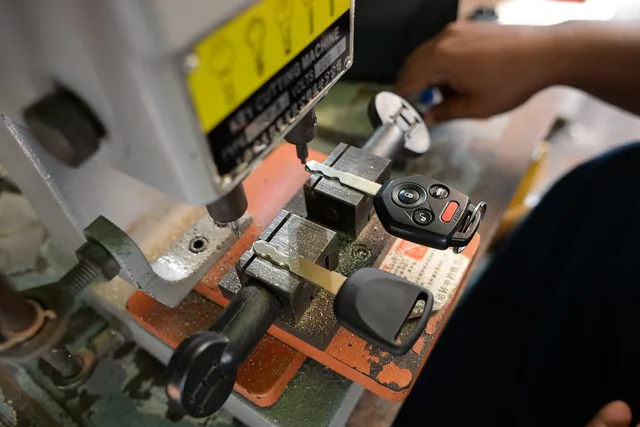
| Key duplicator | $300 to $1,000 | manual |
| Code machine | $1,500 to $5,000 and up | only if the mix needs one |
| First van stock | $1,000 to $3,000 | blanks, cylinders, hardware |
The Small Business Administration business guide maps that sequence, and the IRS starting a business pages cover entity choice and the employer identification number. What a permission answer should actually contain is worked through in the locksmith licensing and compliance guide.
Permission answers to collect
- Entity registered with secretary of state
- Federal tax identification obtained
- State licensing board answer
- City or county license and bond
- Sales tax registration confirmed
Done when: the one-page authority sheet has every answer dated. Time: one to three weeks, mostly the state.
Phase two: insurance, bond and the exposure list
Write down what you can damage before you ask for a quote. A locksmith exposure list usually runs:
- glass, including tempered panels and auto glass
- door hardware, from stripped screws to bent handles
- door frames and jambs
- vehicle trim and window regulators
- safe interiors, including relocker damage
- rekey damage, such as a plug scored by a worn follower
Locksmith exposure list
- Customer door, frame or hardware damage
- Vehicle damage during a service call
- Loss or misuse of keying records
- Theft allegations after a service visit
- Injury on a customer site
- The vehicle and its contents
Take that list to a broker instead of asking for a generic trade policy. The list makes the conversation specific, and it tells you which jobs your cover does not reach.
Done when: a signed policy next to a written note of what it excludes. Time: one to two weeks to bind.
The exclusions note is the useful half. Cover is easy to assume and hard to remember, and the moment to learn that safe work or automotive work sits outside the policy is while you are still deciding whether to offer it.
Phase three: decide the service mix, then buy to it
Only now does tooling make sense. The mix decides the stock. A residential and light commercial mix might be:
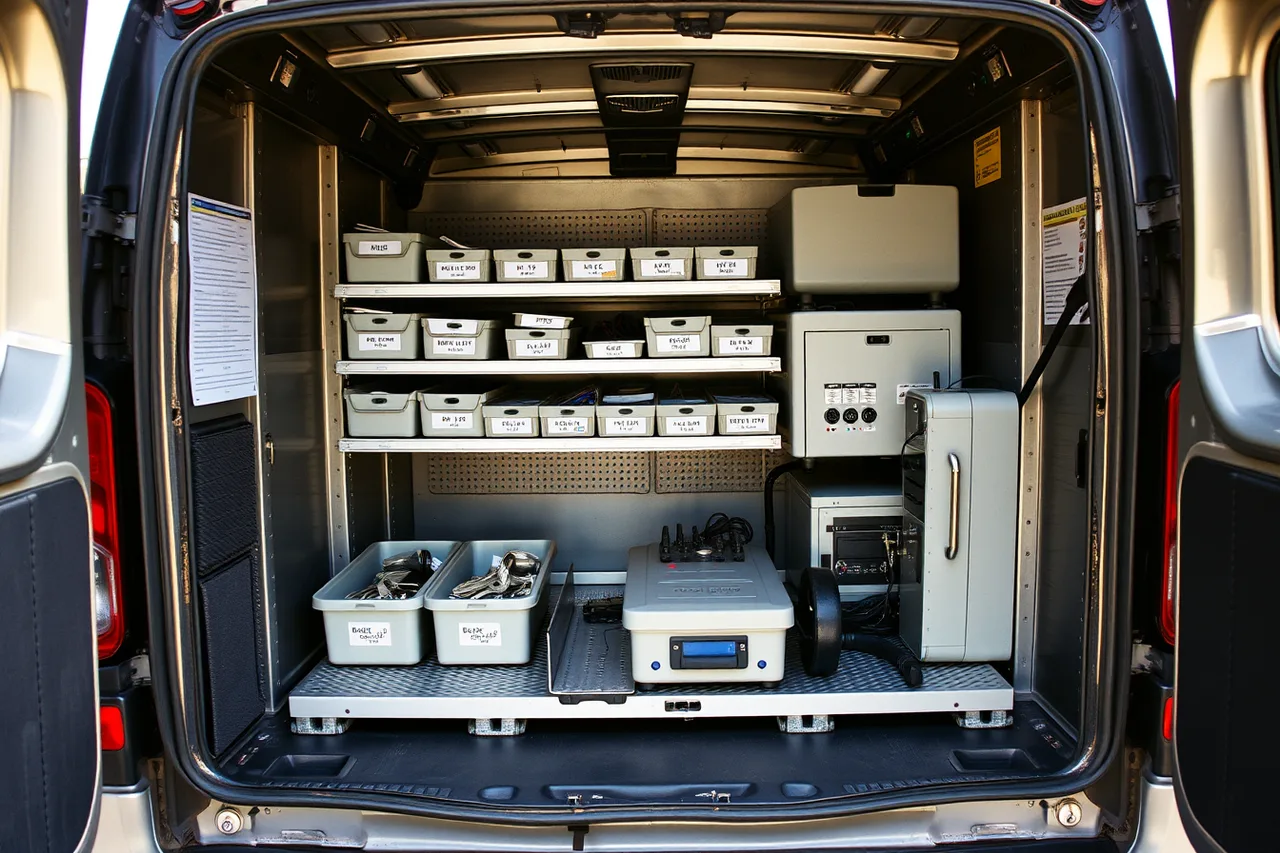
- KW1 blanks, 100 counts, brass and nickel plated
- SC1 blanks, 100 counts, brass and nickel plated
- KW10 and SC4 blanks, 50 counts each
- single cylinder deadbolts in satin nickel (US15) and aged bronze (US11P), five of each
- a pinning kit covering .003 to .020 pins in the two common diameters
- one manual duplicator now, and a code machine only when a repeated keyway pays for it
The reversal to avoid is buying a broad kit and then finding that local buildings use a narrower set of hardware than the kit assumes. Ask two local suppliers what moves. Look at the housing stock and the commercial doors around you. The locksmith equipment and setup guide works through the van layout that follows.
Done when: a stock list with quantities, and a van where every item on it has a fixed home. Time: a day to order, plus supplier lead time.
Phase four: write the intake script before the phone rings
A script written under pressure is a script that skips things. At minimum it captures the caller, the address, the hardware described, the reason for the call, and the evidence of entitlement to direct work on that lock.
Intake script must capture
- The caller
- The address
- The hardware described
- The reason for the call
- Evidence of entitlement to direct work
Read aloud, the opening runs like this:
"Thanks for calling. Can I take your name and the address where the lock is? Is the property a home, a business or a vehicle? Who will be there when I arrive, and what photo ID will they show?"
It also carries the words for declining. Three cases are foreseeable, and each needs its own line:
- a residential caller who cannot show identification matched to the address: "I can only open a door for someone whose ID matches this address."
- a tenant asking for a change the owner has not authorized"I need the owner's approval before I touch a lock on a rental."
- a vehicle caller with no title or registration"I cannot cut or program a key without the title, the registration and matching ID."
Done when: the script, plus a blank job file showing where the evidence gets attached. The wider workflow it plugs into is in the locksmith operations and workflow guide. Time: an afternoon.
Phase five: publish, and keep the claims defensible
Response commitments, coverage areas, licensing statements and starting prices are all claims. The FTC guidance on truthful advertising asks that a claim be substantiated and that a material relationship behind an endorsement be disclosed.
A reachable coverage area and an explainable price basis are slower to write and far easier to live with. Channel choice is a separate study in the locksmith marketing and growth guide.
Done when: a claims sheet listing every public promise and the evidence behind it. Time: a few hours to draft.
Phase six: run the first jobs deliberately
Treat the first month as measurement. For every job record travel time, on-site time, parts used, whether the authority evidence arrived without friction, and whether anything sent you back.
Those records turn the plan's guesses into a defensible rate. They are also the first input to any hiring decision, which the locksmith hiring and training guide picks up.
Done when: a completed job file for every call, including the ones you declined. Time: the first month.
Common questions
How long does the sequence take?
That depends on your registrar, your licensing authority and your supplier lead times, none of which you control. Running the phases in order is what you do control. Ask each authority for its own current processing time rather than trusting a general figure.
Can I skip the intake script if it is just me?
That is when it matters most, because nobody else is there to catch a skipped check. A one-person shop at the end of a long day is the situation the script exists for. Keep it short enough to read on a phone.
What if my state does not license locksmiths?
Then you register the business, satisfy the local and tax requirements, and record that the trade is unlicensed there with the date and source of the answer. It also means you must not describe yourself as licensed in your advertising.