Guides
What a locksmith business hire must learn in the first weeks
A new locksmith hire must learn cylinder and keyway vocabulary, authority checks, and van discipline before working alone on a customer's door.
What to take away
- The first weeks teach vocabulary and authority, not technique. A hire who cannot name a cylinder type cannot quote a job.
- Every job starts with proof the caller controls the property. No proof, no work, no exception for a busy Saturday.
- Van stock is a training subject. A missing key blank turns a one-hour job into a two-hour round trip.
- Ride-alongs come before solo dispatch. Watch the hire run three jobs end to end before you hand over keys to a van.
- Confirm licensing, insurance, and any state or city registration for locksmith work with your state licensing board.
Teach the parts before the jobs
A new hire cannot talk to a customer about a lock they cannot name. Start with the hardware in your own van, not a textbook.
Work through cylinder types first: pin tumbler, wafer, disc detainer, mortise, and euro profile. Handle each one. Point out where the keyway sits and why a restricted keyway changes what you can cut on the truck.
Then cover the difference between rekeying and replacement, because customers ask for the wrong one. A rekey keeps the lock body and changes who holds working keys. Replacement changes the hardware. A written scope for each lock family keeps the rekey and replacement boundary clear when the hire quotes alone.
Key blanks and code cutting come next. Show the hire how a code becomes a cut key on your machine, and where the blank lives in the van. Transponder and proximity credentials belong in the same lesson, since a modern job often ends with a credential rather than a cut key.
Authority comes before the toolbag
The rule is simple and it does not bend: verify the person asking for the work has the right to authorize it. A tenant, a property manager, and a vehicle owner each bring different proof.
Write down what counts as proof for each job type your shop takes. For a rental, that is usually the lease or the manager's written approval. For a vehicle, registration or title matching the person present. For a business, someone with signature authority or a work order.
If the proof is missing, the hire stops and calls you. Refusing an unauthorized job costs one invoice. Doing it costs the license.
Stock the van like the job depends on it
A hire who has to drive back for a blank or a strike plate learns the wrong lesson about pace. Build the van list together in week one.
- Walk the shelves and name every item the hire will touch.
- Load a starter kitcommon key blanks, cylinders, strike plates, screws, and the hand tools for each lock type in your service mix.
- Set a restock trigger for each bin, so the hire reorders before the shelf is empty.
- Check the kit at the end of every shift for the first month.
Worked example: the first solo call
A dispatcher sends the hire to a rental unit where the tenant lost a key. The hire arrives, names the mortise cylinder, and quotes a rekey.
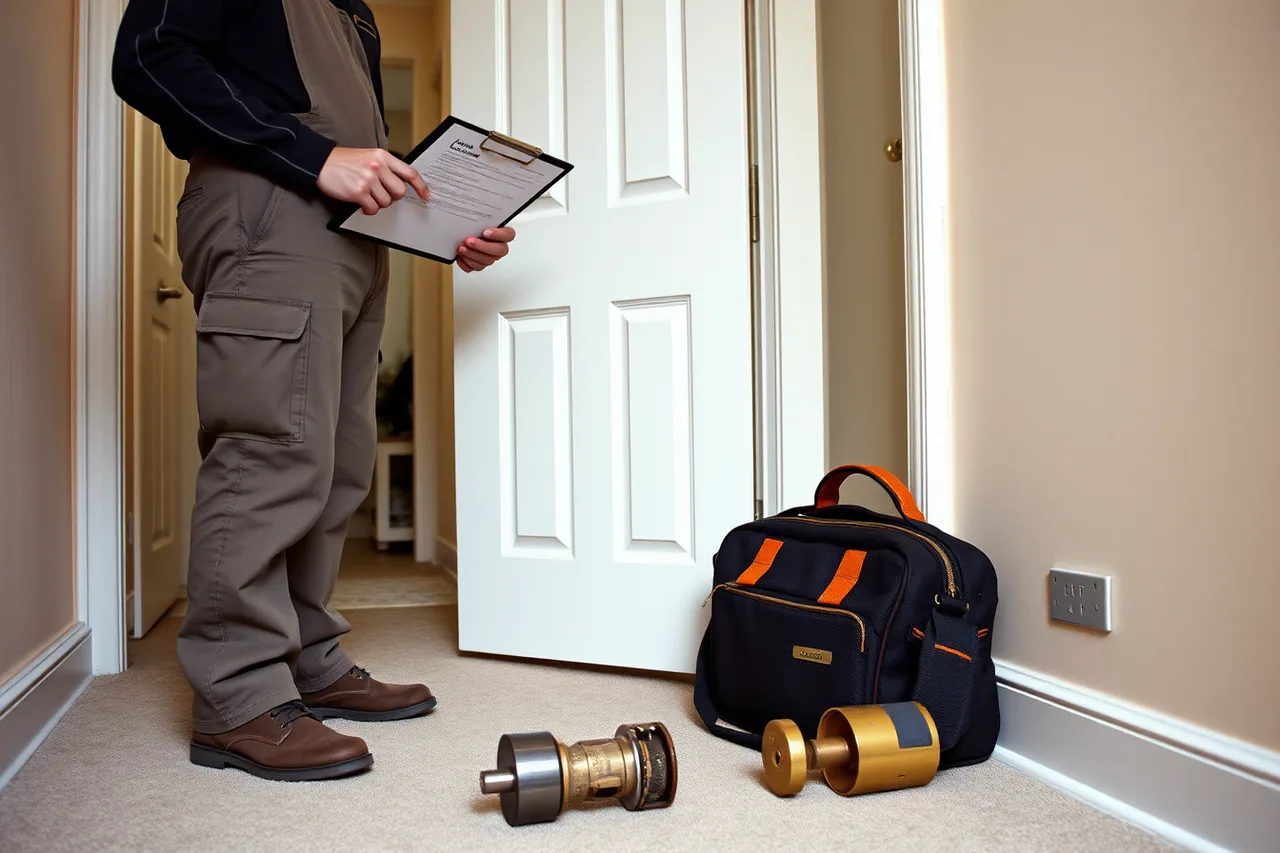
Then the tenant cannot show a lease or reach the manager. The hire calls you, you call the manager, and the manager authorizes the work in writing. The job runs twenty minutes longer than planned and the invoice stands.
That call teaches three things at once: cylinder identification, authority verification, and how to keep a customer calm while the paperwork catches up.
Pay and staffing follow the training
Training time is paid time, and your pay scale has to reflect what a trained technician is worth in your market. Local wage data from the Bureau of Labor Statistics wage tables is one input when you set that scale. The locksmith pay rates and labor costs page covers how to build the number.
Two federal resources matter once the hire is on payroll. The Department of Labor small business compliance guide covers wage, overtime, and recordkeeping duties. The EEOC small business resource center covers fair hiring and accommodation questions.
If you are still building the team around this hire, how to hire reliable staff for a locksmith business covers the recruiting side.
Common questions
How long before a new hire works alone?
It depends on the hire and the work mix. Three supervised jobs end to end, with no missed authority check and no return trip for stock, is a reasonable bar before solo dispatch.
Should a new hire learn safe work and automotive entry in week one?
No. Those carry their own authority and liability questions. Sequence them after the hire is solid on residential cylinders and rekeying.
What if the hire has locksmith experience already?
Test the vocabulary and the authority habit anyway. Experienced hires sometimes skip the proof step because their last shop was loose about it.