Guides
Locksmith equipment makers worth knowing
Key machines, cylinder lines and credential systems from named makers, with what each one does and who it suits in a working locksmith shop.
What to take away
- Key machines come in three familiesduplicators (Silca, Ilco, JMA, Keyline), code cutters (Silca, Keyline, Framon), and laser or dimple machines (Silca, Keyline, JMA).
- Cylinder and lock hardware worth stockingSchlage, Kwikset, Yale, Medeco, Mul-T-Lock, ASSA Abloy, Master Lock.
- Credential and access control linesHID, Allegion, Salto, dormakaba, Kaba Ilco.
- Safe and automotive work pull from separate makersSargent & Greenleaf, La Gard, American Lock, Strattec, Ilco.
- Score every candidate on repeatability, parts horizon, serviceability, support, training load and cost of ownership before you buy.
Key machines: what each maker is for
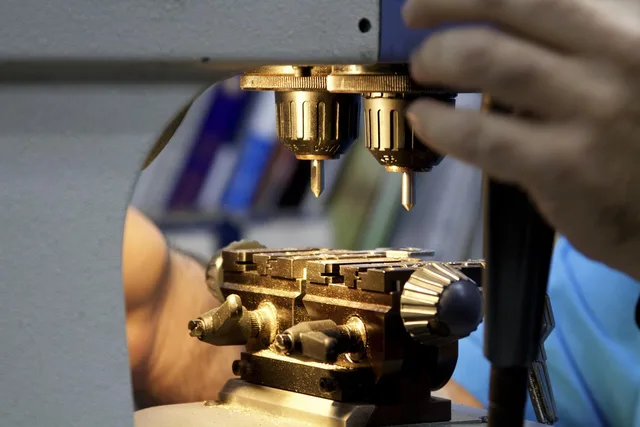
Duplicators trace an original key and cut a copy. Silca and JMA both build counter machines and van-portable units; Silca's Bravo and Speed lines are common in shops that cut hundreds of keys a week. Ilco (Kaba Ilco) makes the entry-level duplicators many vans start with. Keyline builds the same family for European profiles.
Code cutters cut from a bitting rather than a sample, which is what you need when the customer has no working key. Framon is the American name most associated with manual code cutting; Silca and Keyline sell electronic code machines that also handle high-security keyways.
Laser and dimple machines cut the side-milled and dimple keys used by Mul-T-Lock, ASSA, and most European cylinders. Silca, Keyline and JMA all make them. These cost more and are worth it only if your market actually carries those keyways.
Cylinder and lock hardware
Schlage and Kwikset dominate residential and light commercial in the US, and both publish keying schedules you can build master key systems on. Yale sits in the same tier and shares some keyway families with older stock.
Medeco and Mul-T-Lock make restricted keyways: the blank is controlled, so a customer cannot get a copy without your authorization. That is the product you sell when a building manager wants key control, not just a lock.
ASSA Abloy owns a wide portfolio (Medeco, Mul-T-Lock, Yale and others under its umbrella), so a single distributor relationship can cover several lines. Master Lock covers padlocks and the low end of commercial hardware.
Credentials and access control
Proximity and transponder credentials come from HID (the Prox and iCLASS families), Allegion (Schlage and Von Duprin electronics), Salto (standalone electronic cylinders that retrofit onto existing doors), dormakaba, and Kaba Ilco for the key-and-credential hybrids.
Electric strikes and access controllers pair with these. If you install access control, the credential line you standardize on decides which controllers and readers you stock, so pick it deliberately rather than by what a distributor has on the shelf that week.
Safe and automotive lines
Safe work uses a separate supply chain: Sargent & Greenleaf and La Gard for locks and dials, American Lock for padlocks and hasps. Automotive entry and key programming pull from Strattec (OEM key blanks and lock service parts) and Ilco (aftermarket blanks and programmers). These are not interchangeable with your door hardware stock, and the tools are different too.
Score before you buy
What you test
- Repeatability
- Same input, same output, three times
- Parts horizon
- How long the machine stays serviceable
- Serviceability
- What the operator can fix in-house
- Support
- What happens the day it stops
- Training load
- Time until a second person is accurate
- Cost of ownership
- Cost per year including consumables
How to get evidence
- Repeatability
- Cut one key three times and measure all three
- Parts horizon
- Ask a supplier, not the seller
- Serviceability
- Ask what needs a technician
- Support
- Call support before buying
- Training load
- Ask an existing user about their last hire
- Cost of ownership
- Purchase plus refurb plus consumables, over honest life
Weighted score = sum of (criterion score x criterion weight), weights totaling one. Write the weights down before you score, or you are dressing a decision already made as an evaluation. A van doing residential rekeying weights repeatability and training load; a counter operation weights parts horizon and support; an access control installer weights support and cost of ownership.
Gathering evidence on a named maker
Ask three current users the same three questions. What has gone wrong with it? How long did parts take? Would you buy it again for the same work? Write the answers verbatim.
Ask a supplier, not the seller, how long parts stay available for that model and what the common failure is. Suppliers answer honestly more often than people expect, because they are the ones who must source the part.
Call the support line before you buy. The response you get as a prospect is the best case, and that case is still useful information. Test in your own conditions: a machine that works on a warm bench can behave differently in a cold van in February.
Where the equipment decision reaches
Equipment sets the boundary of what you can honestly advertise. If the machine or hardware line does not support a job, the coverage claim must not either, and the FTC guidance on truthful advertising treats a capability claim like any other claim.
Guarding, dust, noise and vehicle mounting are hazards to identify and control, which is the pattern the OSHA safety program guidance sets out. Keep purchase and service records for each machine as the IRS recordkeeping guidance describes. That history is what makes the next evaluation evidence rather than memory.
How tooling follows the service mix is worked through in the locksmith equipment and setup guide. What belongs in the van at all is listed in the locksmith equipment checklist.
Which hardware families are worth equipping for depends on the buildings around you, which is the subject of best markets for a locksmith business.
Operator training for a new machine belongs to the locksmith hiring and training guide.
Whether a line needs a permission you do not hold is a question for your own authorities, using the method in the locksmith licensing and compliance guide.
Common questions
Why name makers at all if the market shifts?
Because a buyer needs a starting point. The names above are the ones a distributor will recognize and a parts department will stock. The scoring sheet is how you separate them for your own work, not a substitute for knowing who they are.
Do I need all three key machine families?
Only if your market carries all three keyway types. Most residential and light commercial shops run a duplicator and a code cutter; laser and dimple machines pay off only where Mul-T-Lock, ASSA and similar cylinders are common.
How does this differ for safe and automotive work?
The makers, the blanks and the tools are separate supply chains. Strattec and Ilco cover automotive; Sargent & Greenleaf and La Gard cover safes. Stocking one does nothing for the other, so treat them as distinct equipment decisions.