
Guides
Locksmith Business Operations: Van Safety Guide
Locksmith business operations depend on practical van safety: PPE, chemical handling, ventilation, cargo security, ladders, records, and OSHA coverage.
What to take away
- OSHA 1910.132 requires a written hazard assessment, free PPE and documented training for every technician who cuts keys or handles solvents.
- HazCom requires a label on every secondary container, a safety data sheet the technician can reach during the shift, and training on the pictograms.
- NIOSH treats local exhaust at the cutting wheel as the primary control for brass dust; general dilution is a supplement, not a substitute.
- OSHA 1910.176 covers tie-downs, stacking height and clear exits in the cargo area, and it applies to a one-van shop.
- Ohio runs a State Plan covering private employers; Texas, Florida and New York leave private locksmith businesses to federal OSHA.
Safety rules and controls for locksmith vans
For locksmith business operations, a van is a workshop, a warehouse and a commuter vehicle at once. That mix is what draws federal attention, and the standards do not shrink because the shop is small.
Several safety areas matter in locksmith work. Personal protective equipment sits under OSHA 1910.132. Chemical storage and hazard communication sit under HazCom. Material handling and storage sit under OSHA 1910.176, while ladder work falls under the walking-working-surfaces rules.
A van carrying pin kits, key blanks, a duplicator, degreasers, lock lubricant and a six-foot stepladder is a compact hazard set. Employers with ten or fewer employees owe the same duty to provide a workplace free of recognized hazards. What changes with size is paperwork volume and the odds of an inspection.
PPE: the hazard assessment comes first
OSHA 1910.132 requires employers to assess the workplace for hazards, select suitable PPE, and provide it at no cost. The 1910.132 general requirements text also requires training, documented with the employee's name and the date.
For locksmith work the assessment is short but real. Eye protection is the common item, because key cutting throws brass chips and broken blade fragments. Safety glasses with side shields meet the basic need.
Hand protection covers cut blanks, glass fragments from a broken vehicle window, and cleaning solvents. Nitrile gloves handle most solvent tasks. Cut-resistant gloves help when pulling a broken cylinder.
Hearing protection earns a line if a technician runs a high-volume duplicator for long stretches. Footwear earns one too: a sturdy work boot protects against a dropped cylinder or a pry bar slipping off a door frame.
Respiratory protection is where small employers get caught. A dust mask worn voluntarily is not PPE under the standard. If you require a respirator for solvent or dust exposure, the full program follows: medical evaluation, fit testing and training.
The PPE overview page collects the subpart I standards in one place, which is useful when you write the assessment. Write it down. An inspector who arrives after an injury will ask for the document, and a verbal policy is not a program.
Keep the assessment to one page per job role and revisit it when the work changes. A new hire signs the PPE training record in the first week, alongside the rest of the markets for locksmith onboarding that covers van setup and customer sites.
Chemicals in the van: labels, sheets, training
Locksmith vans carry more chemicals than owners expect. Lock lubricant, graphite, penetrating oil, degreaser and contact cleaner all ride along, and some vans add weatherstrip adhesive or touch-up aerosol.
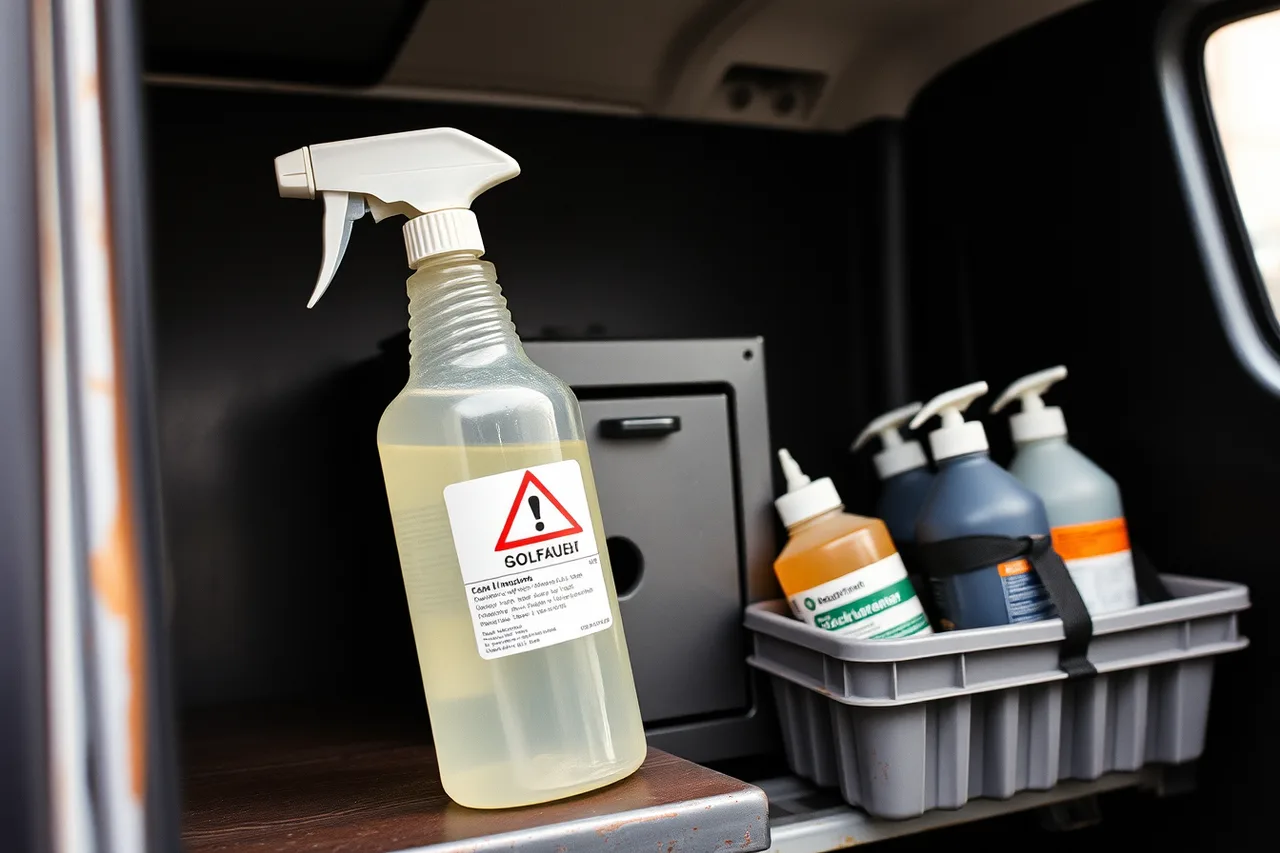
HazCom applies to any chemical known to be present in a form employees may be exposed to. The Hazard Communication overview lays out three duties: labels, safety data sheets and training.
Labels matter most in a van. A product poured from a bulk container into an unmarked spray bottle is a violation and a real hazard. Every secondary container carries the product name and its hazard.
Safety data sheets must be reachable during each work shift. A paper binder in the van works. So does a phone app, as long as the technician can open the sheet during a spill or an exposure.
Training must cover the hazards in use, the protective measures, and the emergency response. Handing over a binder is not training. Employees need to read the pictograms and the signal words.
Storage follows simple rules. Keep solvents out of the cab, away from heat and direct sun, and never loose in a cargo area where a hard stop sends them flying. A closed metal cabinet or a strapped tote is the usual answer.
Check the flash point on the safety data sheet before storing a product in a hot van. A sealed van interior in a Texas or Florida summer can pass the flash point of some solvents.
Build a small spill kit: absorbent pads, nitrile gloves, a waste bag. A spill in a customer's driveway is a business problem, not just a cleanup. Update the chemical inventory once a year with product, quantity and location, because that list drives training and storage decisions.
Ventilation at the cutting bench
Key cutting produces fine brass and nickel dust. Cleaning and lubrication produce solvent vapor. Neither belongs in a closed van for a full shift.
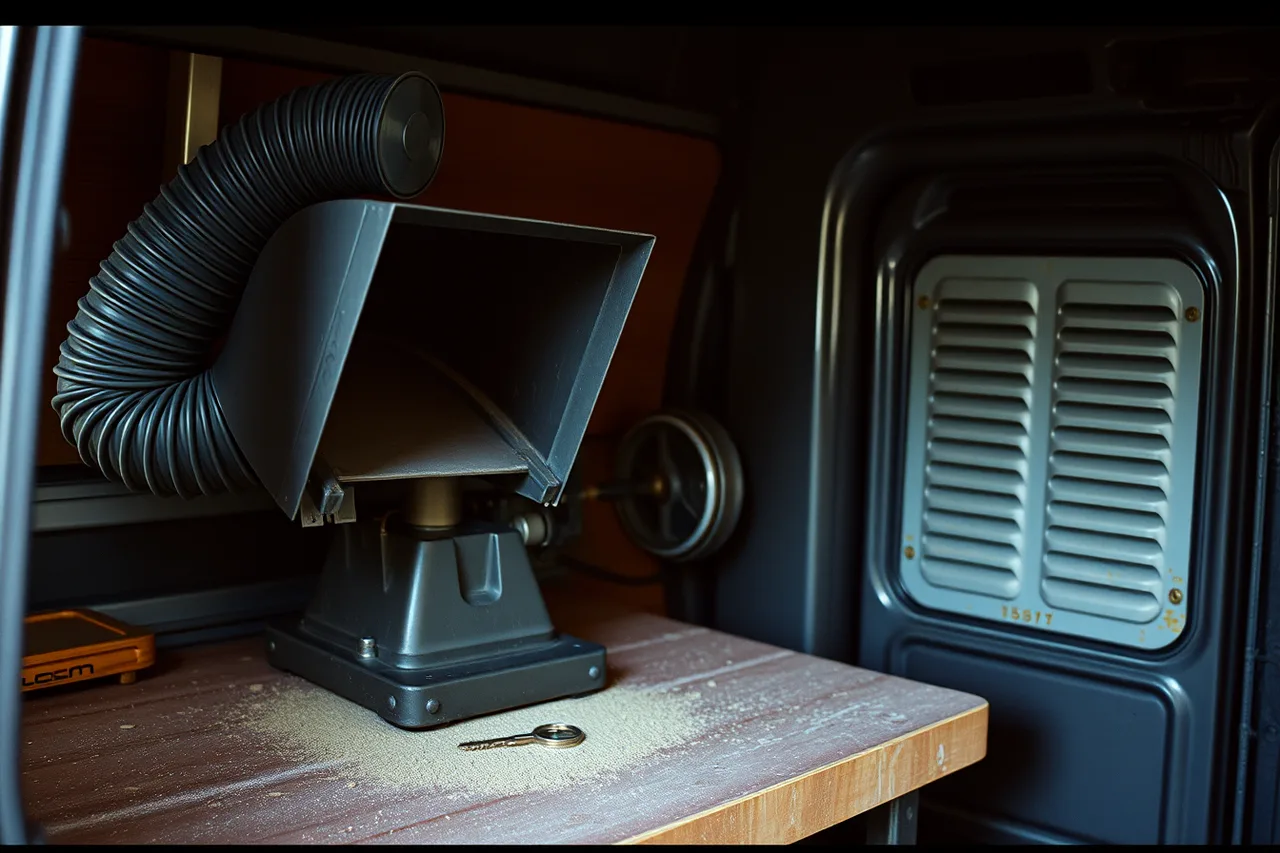
NIOSH guidance favors local exhaust ventilation at the point where dust or vapor is generated, rather than general room dilution alone. In a van, that means a small hood or flexible duct near the cutting wheel, with a fan moving air outside.
Dilution ventilation, which moves large volumes of air through the space, is the weaker control. NIOSH treats it as a supplement to capture at the source.
A dust collection attachment on the duplicator is the simplest control, and many machines accept one. If yours does not, a portable capture hood and a length of flex duct do the job.
Respiratory protection follows the measured exposure. If capture keeps dust low, a respirator may not be required. If it does not, the full OSHA respiratory protection program applies, including medical evaluation and fit testing.
Air monitoring settles the question honestly. A small employer can hire an industrial hygienist for one sampling visit, then use the result to decide whether the controls are adequate.
Keep the bench clean. Brass dust settles on surfaces and re-enters the air when the van moves. Wipe and vacuum rather than blowing dust with compressed air, and plan ventilation before buying the machine. The locksmith equipment decisions you make at that stage decide how easy the controls are later.
Material handling and storage in the cargo area
OSHA 1910.176 covers handling and storing materials. The 1910.176 handling materials standard requires storage that creates no hazard, and secure stacking blocked against movement.
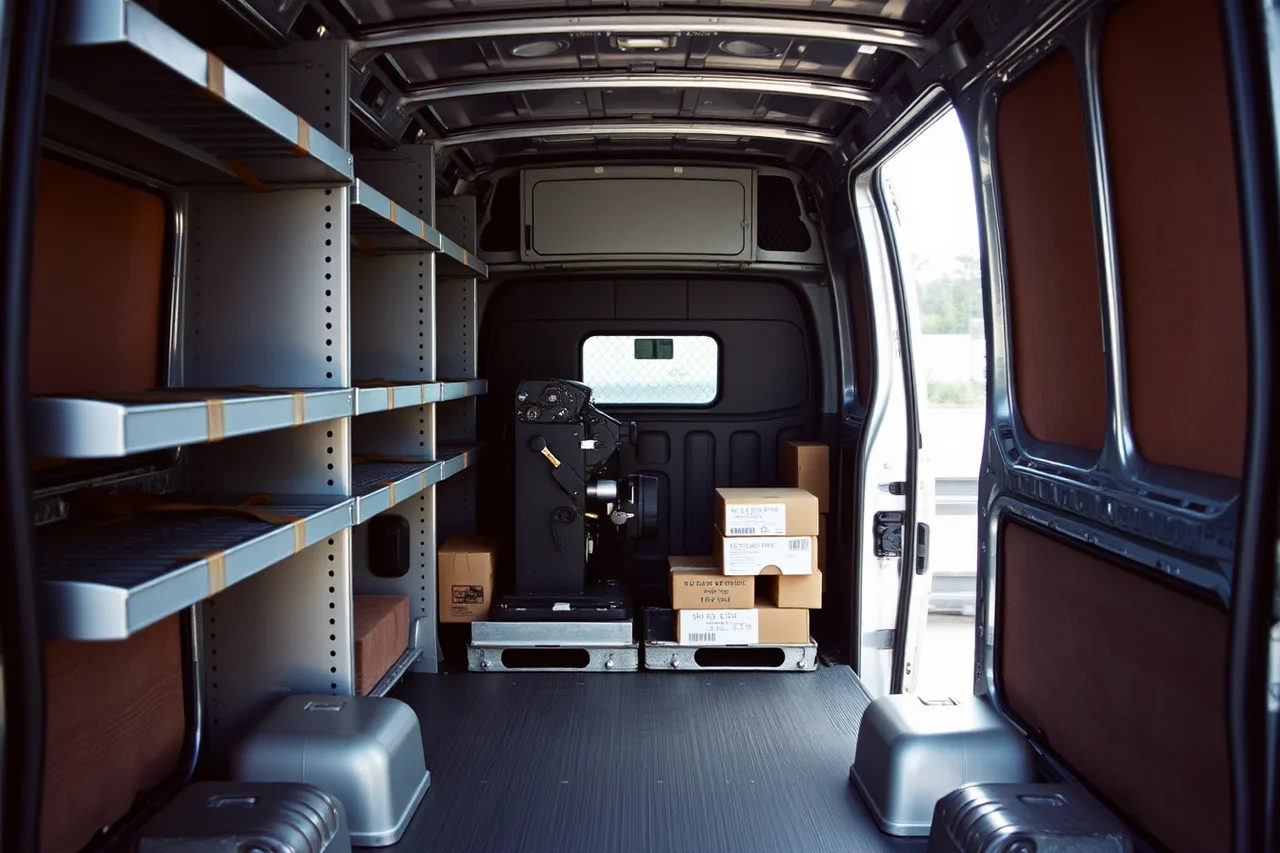
In a van, that means tie-downs and shelves with lips. A loose pin kit or a heavy key machine becomes a projectile in a hard stop. Secure anything weighing more than a few pounds.
Keep the load low and balanced. Heavy items go on the floor or the lowest shelf, lighter stock above. A high stack of key blank boxes blocks the mirror and shifts the center of gravity.
The standard also addresses aisles between stacks. In a van, that means a clear path to the side door and the rear doors, with nothing blocking the exit.
Lifting is part of material handling. A safe door, a floor safe or a heavy cylinder can exceed what one person should lift alone. Use a hand truck or a second technician, and set the limit in writing.
Housekeeping belongs here too. Loose tools and cardboard on the floor are a slip and trip hazard, and an inspector records them in a walkthrough.
A daily check keeps this current. Before the first call, the technician confirms shelves are intact, straps are tight, and nothing is loose in the cargo area. Fold that check into the locksmith SOP checklist so it happens at the same point in every shift.
Ladder work and fall protection
Locksmiths climb. A stepladder for a transom or high lock, an extension ladder for a commercial door frame, a fixed ladder to a roof hatch.
OSHA's general industry walking-working surfaces rules cover portable ladders. The duties are inspection, correct use and training. A damaged ladder gets tagged and removed from service.
Inspect before each use. Look for cracked rails, missing feet, bent rungs, loose spreaders and worn labels. A ladder that fails inspection does not go back on the van.
Setup matters more than most technicians think. A stepladder must be fully open with the spreaders locked. An extension ladder needs a stable base, a secure top and the correct angle.
The four-to-one rule sets that angle: one foot of base distance for every four feet of working height. Too steep and the ladder tips back. Too shallow and the base slides out.
Keep three points of contact. Both hands and one foot, or both feet and one hand. Carry tools on a belt or hoist them, never in your hands.
The top of a stepladder is not a step. Standing on the cap or the top rung causes falls and citations. Fall protection applies at height, and on a portable ladder the honest control is to avoid the height when the job allows.
Training must cover the specific ladders in use. A technician who has never been shown how to check a spreader or set an angle has not been trained, whatever the years on the job. A ladder log with date, ladder ID and result takes a minute and settles the question after an incident.
Which agency inspects your shop
Federal OSHA covers private employers in most states, but about half the states run their own programs. The State Plans page lists which states operate an OSHA-approved plan and whether it covers private workers, public workers, or both.
Texas and Florida are federal OSHA states for private employers. A private locksmith business in Dallas or Tampa answers to federal OSHA.
Ohio runs a State Plan covering private and public employers, administered by the Ohio Bureau of Workers' Compensation. The standards must be at least as effective as the federal rules.
New York runs a State Plan for public employees only. Private locksmith businesses in New York are covered by federal OSHA, a distinction owners often get wrong.
State Plans must be at least as effective as federal OSHA, and many adopt the same standards word for word. Some add requirements, and penalties can differ. For a multi-state business, keep a short table of which agency covers each location so a manager knows who to call.
| State | Plan type | Covers private locksmith employers |
|---|---|---|
| Texas | Federal OSHA | Yes, federal enforcement |
| Florida | Federal OSHA | Yes, federal enforcement |
| Ohio | State Plan | Yes, state enforcement |
| New York | State Plan, public employees only | No, federal enforcement |
Falls, chemical exposure and material handling stay on enforcement priority lists because they cause injuries across many industries. A small business is not exempt. OSHA conducts programmed inspections in high-hazard industries and unprogrammed inspections after a fatality, a catastrophe or a formal complaint.
Records that make the program defensible
Paper turns a good habit into a defensible program. Six records cover most of what an inspector will ask for.
- Written hazard assessment for each job role, signed and dated
- PPE training records with employee name and training date
- Chemical inventory, SDS access method and HazCom training records
- Ladder inspection log with ladder ID and result
- Incident reports and corrective actions for every injury or near miss
- Ventilation control notes for the cutting bench and van
Keep the records where a manager can find them in five minutes. A binder in the office plus a digital copy works for most small operations. Review the program once a year and after any incident, and update the hazard assessment when you add a machine, a chemical or a service line.
New hires need the safety orientation before their first solo call. That fits into the locksmith operations calendar you already keep for scheduling and dispatch.
Safety records belong in the same folder as your licenses and registrations. The locksmith compliance checklist covers those, and a program that lowers insurance cost and downtime is worth the hour it takes to assemble.
Common questions
Does OSHA apply to a one-person locksmith business?
Yes, if you have at least one employee. A sole proprietor with no employees is generally not covered, but the moment you hire, the general duty clause and the standards apply.
Do I need a written PPE program for a van?
OSHA 1910.132 requires a hazard assessment and training, plus written certification of the assessment. A short written program is the practical way to show both.
Can I store solvents in the van cab?
No. Keep solvents out of the cab, away from heat and sun, and secured in a closed container in the cargo area with the safety data sheet reachable.
Which agency inspects a locksmith shop in Ohio?
Ohio runs an OSHA-approved State Plan covering private and public employers, so the state program enforces the standards rather than federal OSHA.