Guides
Locksmith Customer Acquisition: Calls, Reviews, Repeat Work
Locksmith customer acquisition starts with missed calls and turns jobs into repeat work through quotes, reviews, and a current Google Business Profile.
What to take away
- Count the calls you already lose before you buy a single admissed rings, abandoned holds, and quotes that never get a follow-up.
- A caller locked out at midnight hires whoever answers and names an arrival time. That is the whole competition.
- Ask for a review after a completed invoice, not after a good one. The FTC's Consumer Reviews and Testimonials Rule addresses fake reviews and certain review practices; do not select only customers likely to respond positively.
- Keep your Google Business Profile hours, service area, and phone number current; wrong hours cost you the urgent search.
- Requirements vary by state and locality. Check the official state licensing agency or license lookup where locksmith licensing applies, and the city or county permitting office, before advertising a service you cannot legally perform.
Answer the phone first
Most locksmith marketing spend goes to traffic that arrives while nobody is at the desk. Before you buy a click, measure the calls you already miss. Pull the last month of call logs and count three things: rings that went to voicemail, holds longer than a minute, and callers who hung up before dispatch picked up.
A person standing outside a locked car or a locked house is not comparing you to four competitors. They are calling down a list until a human answers and gives a clear arrival estimate. A timely, credible estimate can matter as much as price.
Fix the answering before the advertising. Route after-hours calls to a live person, even if that person is you with a cell phone.
If you cannot cover the phone yourself, evaluate live-answering services such as Ruby, AnswerConnect, or Smith.ai. For call attribution, CallRail is one call-tracking option. These are examples to assess for your hours, dispatch process, and budget, not endorsements; confirm each service's current features and terms.
Sell the second job, not the first
Emergency work is one transaction. Rekeys, master key systems and commercial keying schedules are the repeat business, and they come from the customer you just unlocked.
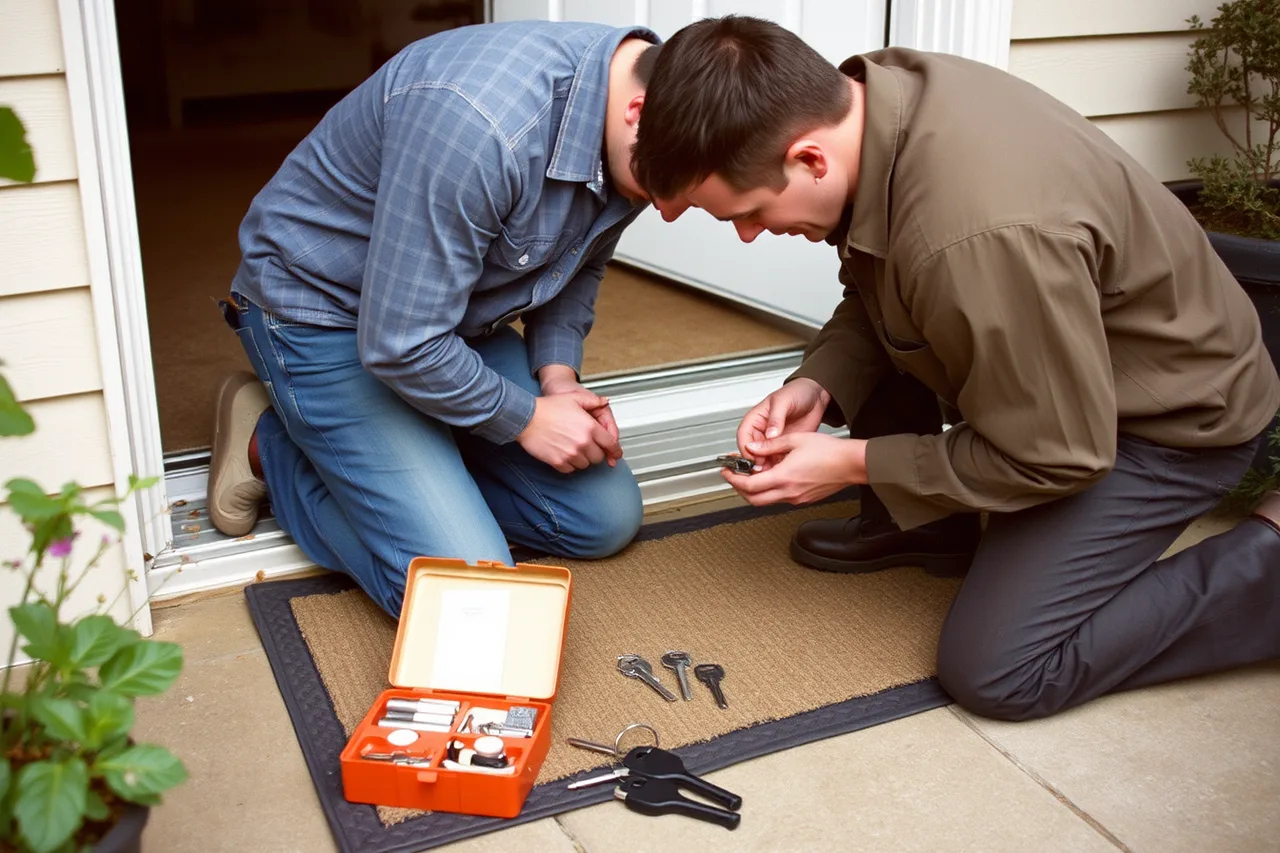
The technician who finishes a job is the only person who can sell the next one. Give them a reason to ask. A landlord whose tenant moved out needs a rekey. A property manager with forty units needs a keying schedule. Neither buys that at 2 a.m., but both buy it the next morning if someone asks.
Track which jobs produce a follow-up quote and which do not. That ratio tells you more about growth than your ad spend does.
Where the customers actually come from
Named channels to evaluate include Google Local Services Ads, Yelp, Angi, Thumbtack, and Nextdoor. The Associated Locksmiths of America's directory can also help customers find locksmiths. Availability and eligibility vary, so track calls and booked jobs by source rather than treating a listing or lead as a completed sale.
Why it works
- Maps and local search
- The caller searches at the moment of need
- Property managers
- One relationship produces scheduled rekey work
- Repeat residential
- Moving season and turnover bring the same address back
- Referrals from other trades
- Plumbers, electricians and realtors meet your customer first
- Vehicle work
- Fleet and dealer accounts book ahead
Where it fails
- Maps and local search
- Stale hours or a wrong service area sends them elsewhere
- Property managers
- One contact leaving takes the account with them
- Repeat residential
- Discounts teach customers to wait for a sale
- Referrals from other trades
- Nothing happens unless you ask for the introduction
- Vehicle work
- Requires automotive credentials and stock you may not carry
Reviews, asked for honestly
Ask every completed job, not the ones you expect to go well. The FTC's Consumer Reviews and Testimonials Rule (16 CFR Part 465) addresses fake reviews and other specified review practices, including buying reviews conditioned on a particular sentiment. The rule does not ban every incentive, but incentives must not be conditioned on positive sentiment, and material connections may require disclosure under the FTC's Endorsement Guides (16 CFR Part 255).
Respond to what you get, including the bad ones, without repeating private details about the customer's address or lock. A reply that says what you changed is worth more than a five-star rating with no text.
Google's local ranking guidance, “How to improve your local ranking on Google,” identifies relevance, distance, and prominence. Google recommends complete and accurate business information and current hours; reviews and positive ratings can also help local visibility. Google Maps' user-generated content policy prohibits incentivized reviews, so follow that policy when asking customers to review your business.
Run one test at a time
Pick one change and give it a window. Let L be the leads per week from a single source, B the share that become booked jobs, and A the average invoice. Revenue from that source is L times B times A. Substitute your own numbers from your own logs.
Change one variable. If you add after-hours answering, watch B. If you rewrite the profile, watch L. Changing both at once tells you nothing about either.
Set the failure signal before you start. If B does not move in the window you set, stop and look at why before you spend more.
Staffing is what makes the answering promise real. A shop that cannot cover the after-hours rotation will lose the calls it paid to receive, which is covered in how to hire reliable staff for a locksmith business.
Common questions
How much should a locksmith spend on marketing?
There is no reliable universal dollar amount: local costs, job margins, and call volume differ. First cover the phone, then set an acquisition cap from the contribution margin on booked jobs—not from clicks or unbooked leads. Track spend and booked jobs by source, and pause a source when its cost exceeds the contribution it brings in over your measurement window.
Do online reviews matter more than referrals?
They do different jobs. Reviews decide whether a stranger calls you. Referrals decide whether a property manager keeps calling. You need the first to get the second.
Can I offer a discount for a review?
Do not offer a discount in exchange for a Google review: Google's Maps policy prohibits incentives for reviews. The FTC's Consumer Reviews and Testimonials Rule (16 CFR Part 465) prohibits buying reviews conditioned on a particular sentiment. If you offer an incentive on another platform, check that platform's policy, do not condition it on a positive review, and disclose any material connection as required by the FTC's Endorsement Guides (16 CFR Part 255).
What if my state does not license locksmiths?
Some states do not license locksmiths, and requirements can also vary by locality. If your state licenses locksmiths, use its official licensing agency or license lookup; also check your city or county business office for permits and other local requirements before advertising a service.