Guides
Quoting a locksmith business job: template and real numbers
A locksmith quote works when it names the cylinder type, the access method, and what changes the price on site, so the customer approves the real job.
What to take away
- Quote the lock, not the visit. In a locksmith quote, a pin tumbler rekey and a mortise cylinder replacement are different jobs with different parts.
- A quote template that names the cylinder type, keyway, and quantity gives the customer a line to approve. "Rekey locks" tells them nothing and invites a dispute.
- Separate the trip charge from the work. Travel is fixed; labor and parts vary with what the door turns out to be.
- State what changes the priceseized cylinders, damaged faceplates, restricted keyways that need blanks ordered in.
- Put figures on the page. Rekeys typically run $15 to $35 per cylinder, trip charges $50 to $100, and deadbolt installation $75 to $200 in labor in most US markets as of 2026.
- Confirm licensing and any permit requirement with your state licensing board; rules differ by state and some states do not license at all.
Build the quote around the cylinder
A quote is a parts and labor list, not a paragraph about service. Start with what is on the door. A pin tumbler cylinder in a knobset rekeys in minutes. A mortise cylinder with a worn cam may not come out without drilling, and that changes the number before you touch it.
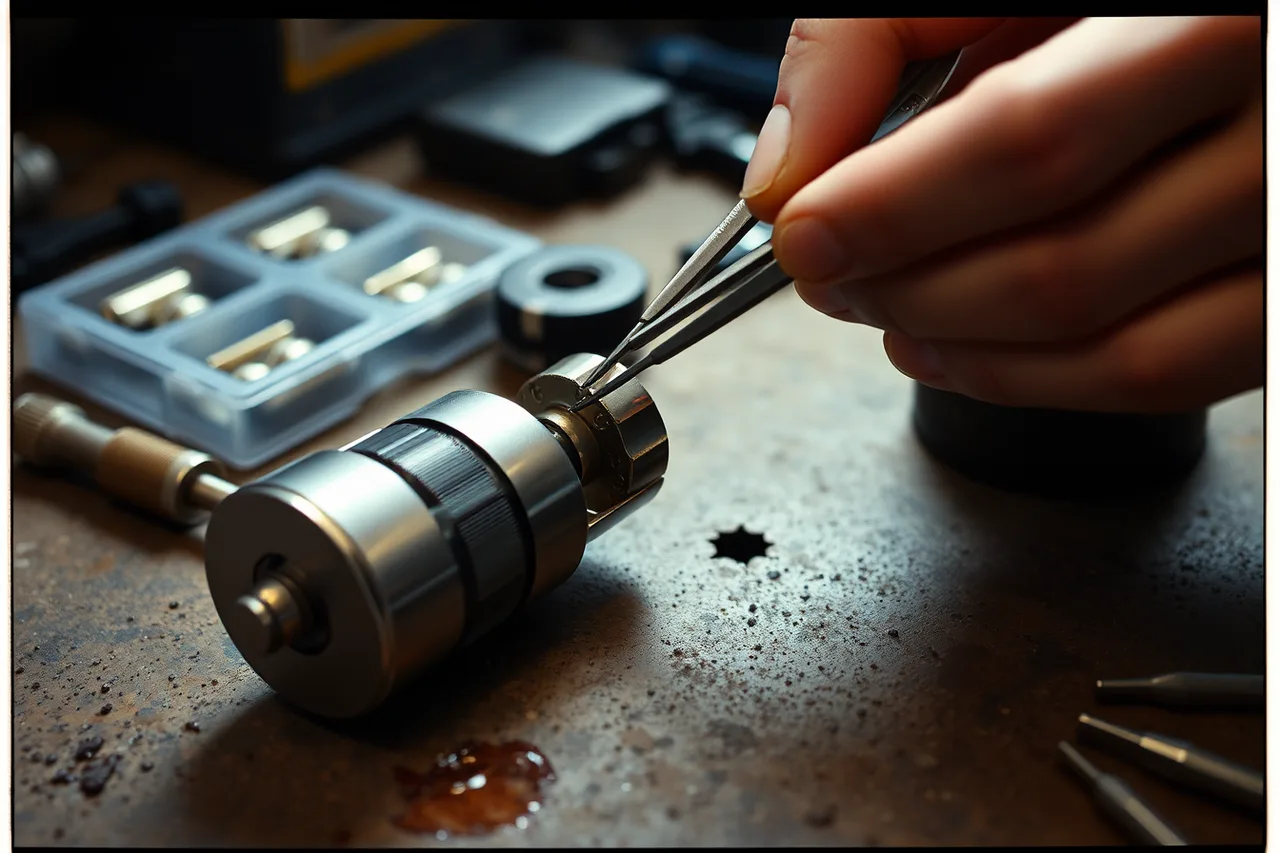
Write the lock type on the quote the way you would say it to another locksmith. Pin tumbler, wafer, disc detainer, mortise, euro profile. Each one carries its own labor time and its own failure mode.
The customer does not need the vocabulary. They do need the line item, because that line is what they approve.
Name the brand and model where you can. A Kwikset 660 deadbolt retails around $20 to $30, and a Schlage B60N around $35 to $50. High-security cylinders from Medeco, Mul-T-Lock or Abloy often run $100 to $300 for the cylinder alone.
Then the keyway. Kwikset KW1 and Schlage SC1 blanks ride in the van, and Ilco or Hillman catalog both. A standard key copy typically runs $3 to $6.
A restricted keyway, such as Medeco or Mul-T-Lock, needs a blank you order. That puts a lead time on the job and a line on the quote, so say so before you start.
What goes in the template
The template is one page, with these seven blocks.
- Customer and authority.Who is contracting, who is on site, and who can approve a change. For a rental, that is the landlord or the manager, not the tenant who called.
- The locks, listed.One line per lock: address, door, cylinder type, keyway, quantity.
- Scope of work.Rekey to a new key, replace the cylinder, cut keys to an existing code, or install a new deadbolt. Name which.
- Trip and labor.Trip charge separate from labor. A typical trip charge is $50 to $100, and billed labor runs $60 to $120 an hour in most markets. For repeatable work, quote a flat rate instead.
- Parts.Cylinders, blanks, strikes, and hardware as line items with quantities. A replacement pin tumbler cylinder typically costs $20 to $70, a standard deadbolt $20 to $60, and a high-security cylinder $100 to $300.
- What is excluded.Door repair, frame repair, painting, and any work the door needs before the lock will function.
- Change approval.Who signs off when the job turns out bigger than the quote, and how they sign off.
Keep the authorization separate from the price sheet. A signature on the scope is not a signature on a blank check.
Quote template line items
- Customer and authority to approve
- Locks listeddoor, type, keyway
- Scoperekey, replace, cut, install
- Trip charge separate from labor
- Parts as priced line items
- Exclusionsdoor and frame repair
- Change approval signature
A filled line from a two-door rekey, at typical 2026 rates:
| Line | Entry | Typical figure |
|---|---|---|
| Trip charge | One visit, standard hours | $50 to $100 |
| Lock 1, front door | Kwikset KW1 pin tumbler knobset, rekey to new key, quantity 1 | $15 to $35 labor |
| Lock 2, back door | Schlage SC1 deadbolt, rekey to match front | $15 to $35 labor |
| Parts | Two Ilco KW1 blanks | $3 to $6 each |
| Excluded | Frame repair and painting | Not quoted |
| Approval | Change line signed by the property manager | Required above the quoted total |
Price the job, not the hour
Where it fits
- Flat rate per lock
- Rekeys and replacements on standard cylinders
- Trip charge plus labor
- Emergency and after-hours calls
- Hourly with a minimum
- Jobs where the door is unknown until it is open
- Keyed-to-code contract
- Property managers with recurring turnover
- Deadbolt install, flat
- Residential replacement or a new fit
What it costs you
- Flat rate per lock
- A seized cylinder eats the margin on that line
- Trip charge plus labor
- The customer compares your trip charge to the next shop's
- Hourly with a minimum
- Fast work earns less than slow work
- Keyed-to-code contract
- You carry the keying schedule and the callback risk
- Deadbolt install, flat
- $75 to $200 in labor, hardware extra
The flat rate is the one customers can compare, so get it right. Price it against your own numbers: T is trip cost, L is labor hours times your rate, P is parts, and M is the margin you need to stay open.
Flat rates in most US markets run $15 to $35 to rekey one cylinder when you are already on site. A whole-house rekey of four to six cylinders typically lands between $100 and $200. Deadbolt installation runs $75 to $200 in labor, and an after-hours lockout $100 to $250.
T + L + P + M is your floor, not your price. Anything below that is a job you are paying to do.
Your margin math belongs in locksmith profit margins and break-even points, not on the customer's quote.
Where quotes go wrong
The quote that gets disputed is the one that named a service instead of a lock. "Rekey house" becomes an argument at the door about whether the back door and the garage count.
Where quotes go wrong
- Named a service, not a lock
- Dispute at the door over scope
- Blank check without change approval
- Stop and get approval before price changes
- Bundling a single-call quote
- Packages only for recurring turnover
The second failure is the blank check. If the quote says the price may change, and the customer signed it, you still have to stop and get approval before the price changes. Write the change line and use it.
The third is bundling. A customer who needs one rekey does not need a package, and offering one reads as a sales pitch. Packages make sense for the property manager with turnover every month, and those belong in locksmith service packages, not on a single-call quote.
Records and claims
Keep the signed quote, the change approvals, and the invoice together per job. The IRS recordkeeping guidance explains what supports income and expense entries, and a quote with a signature is the document that supports the invoice.
If you advertise a price, a response time, or a coverage area, the claim has to hold. The FTC advertising guidance covers what substantiation means for a small business, and a "from" price that no customer ever pays is the claim that draws the complaint.
Quote software such as Jobber, Housecall Pro, and Joist sends a line-item estimate from the van and keeps the signature with the job record. Square and QuickBooks Online invoice from the same line items.
Wage data for your metro, from the Bureau of Labor Statistics tables, tells you what a technician costs before you price labor. The tables list locksmiths and safe repairers by area. In most markets the median sits in the low $20s an hour, and high-cost metros run well above that.
Which markets carry enough of this work to keep a van busy is covered in markets for a locksmith business.
Common questions
Should the quote list every lock separately?
Yes, when there are more than two. One line per lock lets the customer drop a line instead of arguing about the total, and it protects you when the count on site differs from the count on the phone.
What if the door is worse than described?
Stop and re-quote. Call the approving contact, describe what you found, and get a yes on the new number before you continue. A seized cylinder or a broken frame is a new scope, not a surprise on the invoice.
How do I quote a job I cannot see?
Quote the trip and the standard work, then list the conditions that change the price. Those conditions have real numbers: $50 to $100 for the trip, $15 to $35 per cylinder to rekey, $75 to $200 in labor to fit a deadbolt. The customer approves a range with named triggers, not a number you invented over the phone.
What should a rekey cost?
Expect $15 to $35 per cylinder when the locksmith is already on site, plus a trip charge of $50 to $100. A four to six cylinder house rekey typically totals $100 to $200. Restricted or high-security cylinders cost more, often $100 to $300 in parts alone.
Do I need a separate authorization for a rekey?
Confirm who owns or manages the property and can authorize the work. Get that in writing before you cut a key, and confirm any licensing or permit requirement with your state licensing board.