
Guides
Quality control for a locksmith business: checking finished jobs and tracing callbacks
Quality control for a locksmith business means checking each finished job against what the customer was told, then tracing callbacks to their causes.
What to take away
- Quality control means comparing the finished job against what the customer was told, on the same day.
- Three checks catch most callbacksevery key at every cylinder, full door swing, and the customer working the lock unaided.
- Callbacks trace to four causes. Logging which one applies turns a complaint into a fix.
- Check authority evidence before the van moves, not after the work is done.
- Confirm licensing requirements with your state licensing board; they vary by city and state.
The check that happens before the van moves
Most locksmith disputes start at dispatch. A job taken without confirming who can authorize work on that property is a job that can be undone later, at your cost.
For a rekey or lock change, the evidence is ownership or a tenancy agreement, or a work order from the property manager who holds the account. For a vehicle, it is a title or registration matched to photo identification. For a safe, it is ownership of the unit.
Where the evidence does not arrive, the job does not start. Say so on the phone rather than at the door, and record the refusal. A written record of what you declined protects you better than a job you should not have taken.
What to check before leaving the job
Three checks catch most of what comes back.
What to check before leaving
- Operate every key at every cylinder you touched, including the ones you did not change. A key that sticks at one cylinder on a keyed-alike set is a return visit.
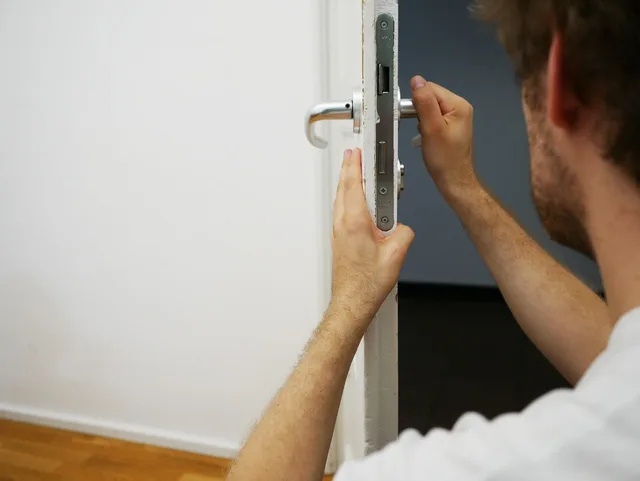
- Open and close the door through its full swing. A deadbolt that binds is usually an alignment problem, not a lock problem, and it shows up within a week.
- Hand the key to the customer and let them work it while you are still there. If they cannot, the job is not finished.
Photograph the finished cylinder and the strike plate before you pack up. The photo settles arguments about condition later.
Where callbacks come from
Callbacks are not random. In most shops they trace to four causes, and each has a different fix.
| Cause | What it looks like | The fix |
|---|---|---|
| Keying error | A key that works one door and not another | Recheck the keying schedule before cutting, not after |
| Alignment | Deadbolt binds, door needs a push to lock | Adjust the strike during the visit |
| Wrong part | Cylinder depth or backset does not match | Measure before the van leaves the shop |
| Customer expectation | They expected a new lock, got a rekey | State the scope in writing at booking |
Track which cause applies to each callback. A shop that logs them usually finds one cause dominates, and that one is worth fixing first.
Writing the standard down
A standard nobody can find is not a standard. Keep one page per job type: rekey, lock change, master key addition, automotive credential, safe service. Each page names the steps, the stop conditions, and what gets recorded.
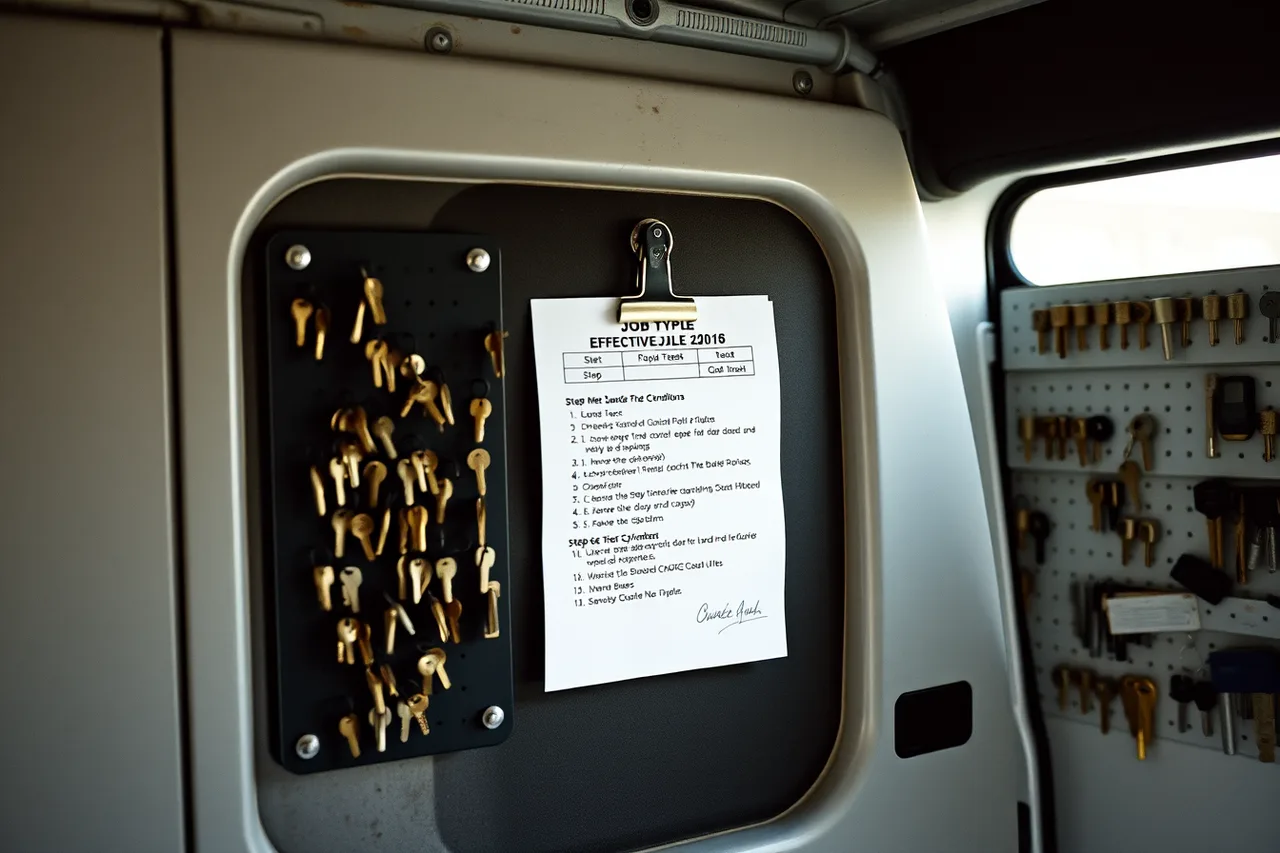
Put an effective date on the page and name who owns it. When the written rule and the real job disagree, staff need a route to report that, because the disagreement is the useful information.
The daily sequence that keeps this running, from first call to closeout, is set out in the locksmith SOP checklist for daily operations.
Records and claims
Every job record should show the time, the materials, the customer's authorization, and the result. Those records are what let you answer a complaint with facts rather than memory.
They also support anything you advertise. Response times, coverage areas and credential claims are the ones most often overstated, and the FTC advertising guidance asks that a claim be substantiated before it runs.
Keep the records long enough to be useful, following the IRS recordkeeping guidance. Van work carries its own hazards, and the OSHA safety management guidance describes finding and fixing them before an injury does it for you.
Which services are worth standardizing first depends on the work your area produces, covered in best markets for a locksmith business.
Common questions
How often should a finished job be inspected?
Every job gets the three checks above before the technician leaves. A second pair of eyes on a sample each month catches drift the technician cannot see in their own work.
What if the customer refuses to provide authorization evidence?
Decline the work and record the refusal. Confirm what your state licensing board requires, since the acceptable evidence varies by jurisdiction.
Does a callback always mean the technician made a mistake?
No. Expectation gaps and part mismatches are just as common. Logging the cause is what separates a training problem from a booking problem.